Event production health and safety in NZ: duties, hazards and communication
Event safety depends on clear communication as much as careful planning. Meeting event production health and safety requirements in NZ means creating a health and safety plan, identifying and managing risks, and keeping relevant people informed as event plans change. Under the Health and Safety at Work Act 2015, organisers also have responsibilities for the health and safety of people affected by their work.
It’s easy to focus on the event itself, but hazards can arise during set-up, live operation and pack-out, across different locations and among different groups of people. A useful plan makes sure staff, contractors and attendees understand the risks that affect them and what to do if conditions change.
This guide explains organisers’ responsibilities, how to identify hazards across event stages and locations, and how to communicate safety information clearly. It also covers how a live risk register and timely updates can keep safety arrangements aligned with the event as it unfolds.
Table of Contents
1. Event organisers’ health and safety responsibilities
Under the Health and Safety at Work Act 2015, event organisers must plan for people affected by event work. WorkSafe provides guidance for persons conducting a business or undertaking (PCBUs) organising events. Safety is shared across organisers, government and the public, but organisers need clear governance, a health and safety plan and practical risk management. Include a risk register in the plan, share it with relevant parties before the event, and update it when hazards or schedules change.
Permit and approval requirements depend on the event’s location and activities. In Auckland, events that require a permit also require public liability insurance. A health and safety plan template can be provided after an event permit is submitted.
For crowd management, capacity, barriers and security, identify relevant hazards and set controls in the event plan. Consider how people will move through the venue, who may need assistance, and how staff will communicate security information. Make arrangements specific to the event and location instead of relying on a generic checklist.
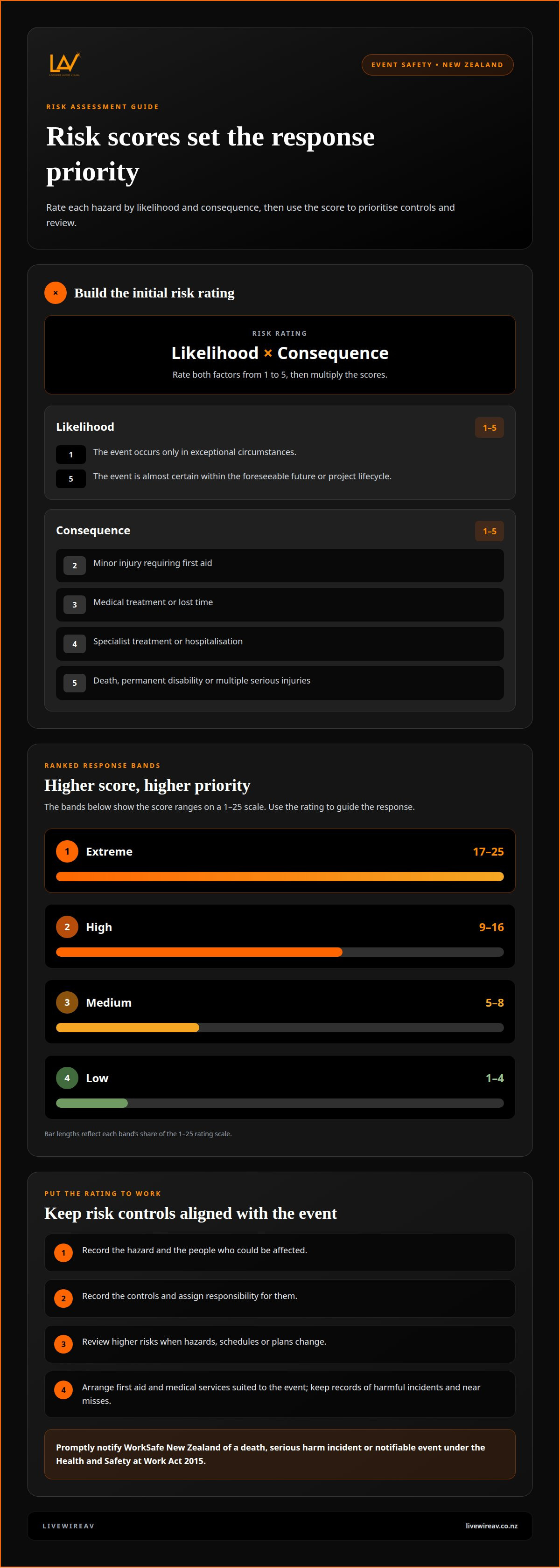
A risk matrix helps prioritise action. Rate likelihood and consequence from 1 to 5, then multiply the scores for an initial rating. Likelihood 1 means an event occurs only in exceptional circumstances; 5 means it is almost certain within the foreseeable future or project lifecycle. Consequence 2 means minor injury requiring first aid; 3 means medical treatment or lost time; 4 means specialist treatment or hospitalisation; 5 means death, permanent disability or multiple serious injuries.
Use the rating to guide the response: 1-4 is low, 5-8 medium, 9-16 high and 17-25 extreme. Record controls, assign responsibility and review higher risks as plans change. Arrange first aid and medical services suited to the event. Keep records of harmful incidents and near misses. Promptly notify WorkSafe New Zealand of a death, serious harm incident or notifiable event under the Act.
2. Hazard identification across event stages and locations
WorkSafe’s event guidance covers identifying and managing health and safety risks. Map hazards across set-up, live operation and pack-out, adding stages where needed. Consider workers, contractors, attendees, the public and anyone else who could be affected. A loading area, backstage route and audience space can present different risks, even at one venue. Use separate risk registers for different locations, or group site-specific entries in one master register. Record each hazard, who could be affected and the control assigned.
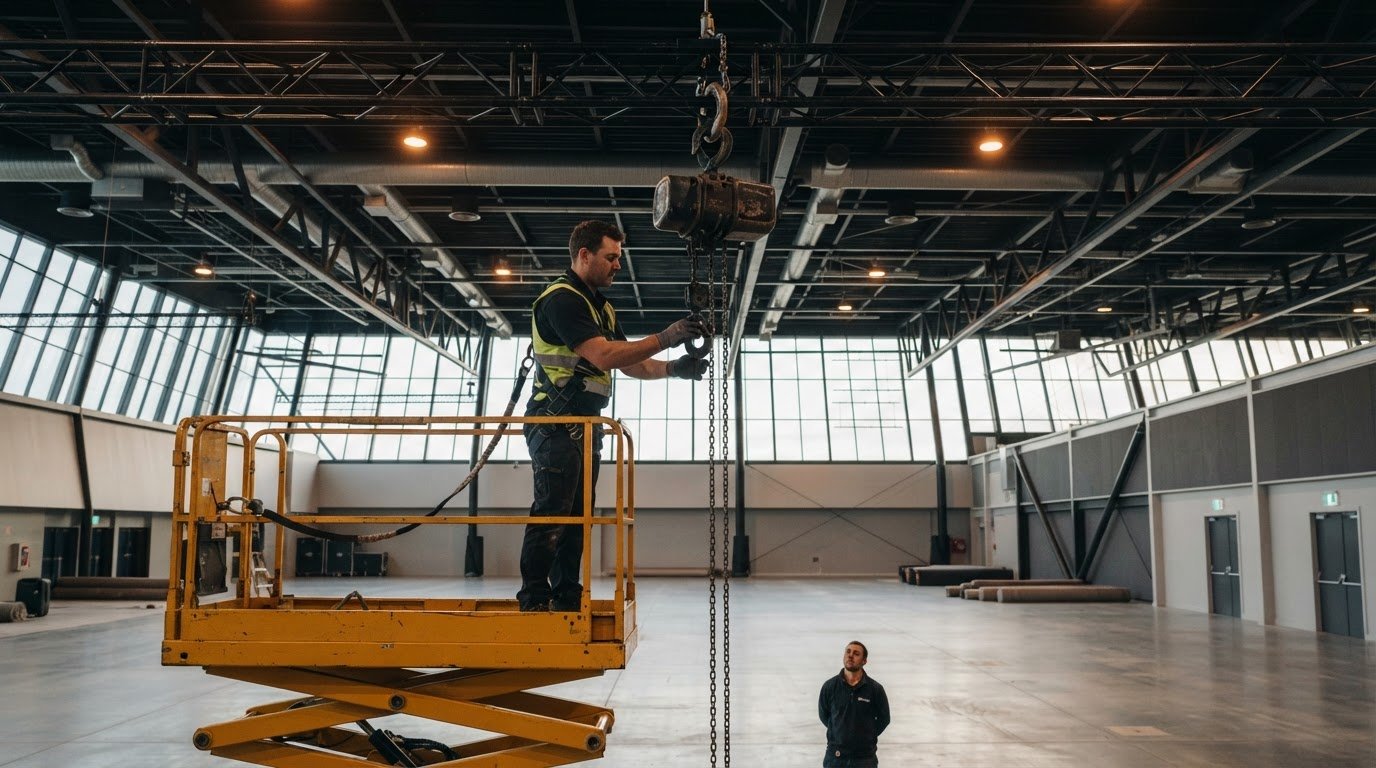
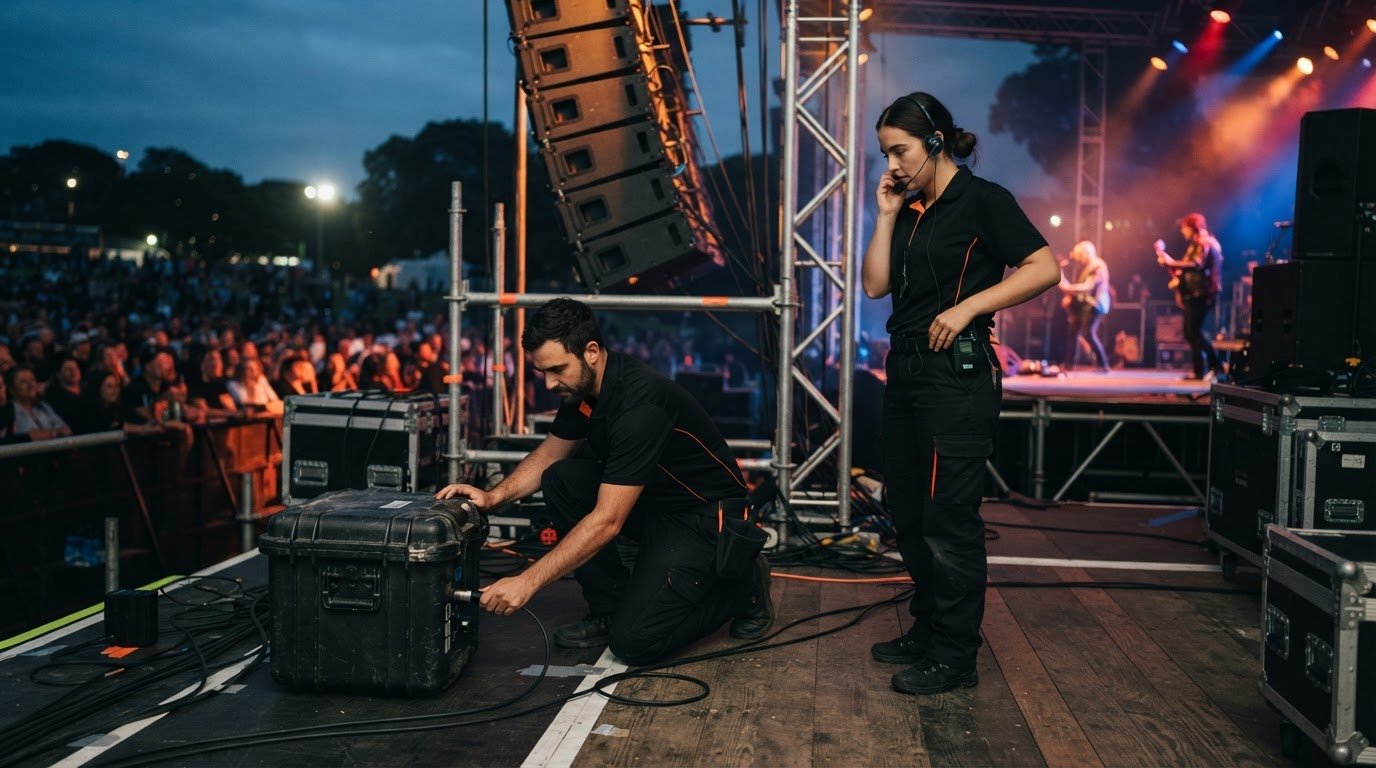
For temporary stages, marquees, scaffolding, rigging and electrical equipment, assess the work and conditions at each location. Consider ground conditions, stability, access, weather exposure, overhead loads, cable routes and contact with electrical equipment. Record how each hazard will be controlled, who is responsible and what changes could affect the control. These checks are part of risk assessment; the arrangements depend on the structure, equipment and event site.
Include noise, hazardous substances, food safety and sanitation in the event’s hazard assessment. Identify where amplified sound or substances could affect people, and how food handling and facilities will be managed. Note who may be exposed, the controls in place and who coordinates them. For example, assess a food service area separately from a backstage work zone.
Review hazards whenever the site layout, schedule or work changes. A delayed stage build could overlap with deliveries; a shifted audience route could create new congestion. Update the relevant register, communicate the change to affected parties and confirm that assigned controls still fit the conditions. For events involving remote presenters or audiences, hybrid and livestream production planning can be coordinated alongside the event’s technical arrangements.
3. Communicating event safety information
Safety information is useful only when the right people receive it in time. Give staff, contractors and volunteers instructions suited to their roles, locations and tasks. Stage crew need access and equipment information; front-of-house staff need clear audience routes and escalation contacts. Share relevant parts of the health and safety plan before the event, then brief teams on changes that affect their work.
Keep messages consistent across briefings, signage, staff communications and attendee information. Explain the hazard, the action required and who can answer questions. For example, tell attendees how to respond to a security concern and where to find event staff. Information about security-conscious behaviour can support a safer event and reassure attendees that their safety is taken seriously.
Keep communication current as schedules, layouts and hazards change. Assign someone to pass updates to affected teams, and make sure revised instructions reach anyone who missed a briefing. If a delivery changes an access route, tell the staff managing that area before the route is used. Record important decisions and updates alongside the relevant safety information.
Reporting matters after an incident, too. Under the Health and Safety at Work Act 2015, event organisers must promptly notify WorkSafe New Zealand of a death, serious harm incident or notifiable event. Keep records of incidents that cause harm and near misses, including what happened, where, who was affected and what response followed. Use those records to identify recurring hazards and improve future event planning.
For a clear handover, make sure each team knows:
which hazards affect its work or location
the control to follow and who is responsible
how to report a concern or near miss
where to get current instructions if plans change
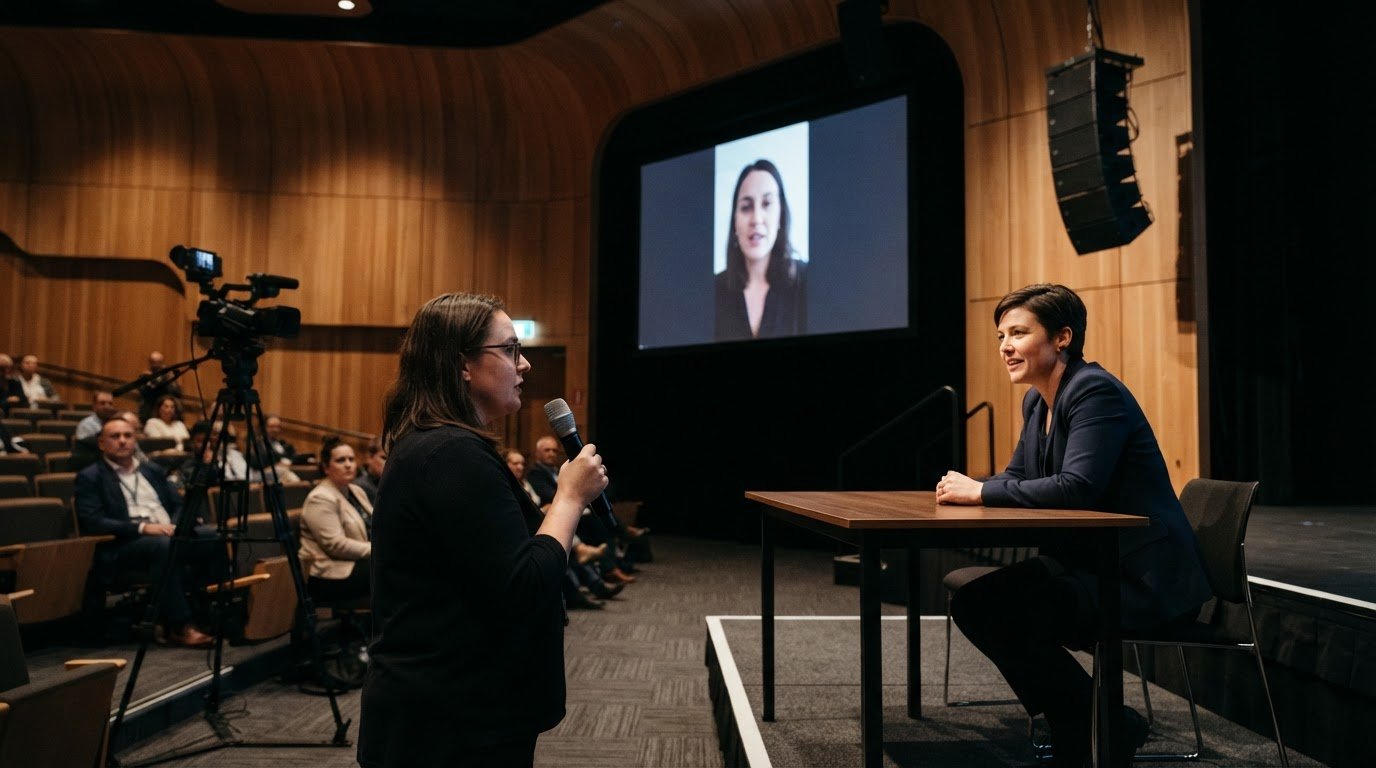
At a hybrid event, include remote presenters and production teams in relevant briefings. They may need timing, access or escalation information even when they aren’t at the venue. A named contact and concise updates help keep communication aligned across the event.
4. What health and safety laws apply to event production in New Zealand?
The Health and Safety at Work Act 2015 is the legislation event organisers should consider when planning event work. WorkSafe provides event guidance for persons conducting a business or undertaking (PCBUs). This gives organisers a practical starting point: identify who may be affected, assess hazards and plan controls. The legal context applies across event activities, not just the hours when attendees are present.
Use the Act as a framework for organising responsibilities and documenting how risks will be managed. For example, account for work before doors open and after the audience leaves in the production schedule. A health and safety plan can bring together responsibilities, site arrangements and the risk register. Share relevant information with everyone involved before the event, then revise it when plans or hazards change.
WorkSafe’s guidance also helps organisers consider their event’s specific circumstances. A farm event, for instance, may involve visitors near normal farm activities, so the organiser needs to assess how those activities affect people. Events differ in size and activity, but planning still needs to identify affected people, hazards and controls. The plan should connect those decisions to how the event will actually run.
Legal responsibilities continue during delivery. Keep records of incidents causing harm and near misses, and use them to review controls. Under the Health and Safety at Work Act 2015, organisers must promptly notify WorkSafe New Zealand of a death, serious harm incident or notifiable event. Include a clear reporting route in event procedures so staff know how to raise an incident promptly.
For production plans that need to align with event safety arrangements, discuss your event’s technical requirements.
LivewireAV: Full Technical Production
LivewireAV provides Full Technical Production for events where audio, video and lighting need coordinated planning. Bring production requirements into the event planning process early, so equipment, access and technical schedules can be considered alongside site arrangements and safety communications.
For conferences or corporate gatherings, production may include Audio Line Array Systems, LED Walls & Projection, or Hybrid & Livestream Events. The right combination depends on the format, venue and audience. Clear production plans help teams understand the technical requirements and how they fit within the wider event operation.
LivewireAV can help when you’re developing an event’s production plan or coordinating technical requirements across locations. Contact LivewireAV to discuss your event.
Put your event plan into practice
Turn your safety planning into clear production decisions while the event is still taking shape. Meeting event production health and safety requirements in NZ involves more than documenting hazards; technical schedules, site access and communication need to work together on the day. A production conversation can help bring those practical details into focus before they become last-minute changes.
LivewireAV provides Full Technical Production, including Hybrid & Livestream Events and LED Walls & Projection. These services support the technical side of your event plan, with production requirements considered alongside the venue and event format. Share your event format, location and technical priorities to start a focused discussion about the production approach.
Contact LivewireAV about event safety and take the next step towards a well-coordinated event plan.
Frequently Asked Questions
What are event organisers' and contractors' duties under the Health and Safety at Work Act 2015?
The Health and Safety at Work Act 2015 provides the framework for event work. Organisers plan the event, while contractors need to coordinate their work with relevant site arrangements and safety controls. For event production health and safety requirements in NZ, clear responsibility matters at handover points. For example, agree who communicates a change when a contractor’s work affects another team’s access or schedule.
How should event organisers complete a health and safety risk assessment and event safety plan in NZ?
Use the event programme and site layout to identify hazards linked to activities, locations and affected groups. A stage changeover, for instance, may need separate consideration from audience entry because the work and movement patterns differ. Record hazards, controls and responsibilities in the plan. Review the assessment when the schedule or layout changes, then pass relevant updates to the teams affected.
What fire safety, emergency planning, evacuation, and first-aid requirements apply to NZ events?
Shape emergency arrangements around the venue, event activities and people attending. The plan should explain how to raise an alarm, communicate instructions, direct people to appropriate routes and identify where first aid is available. Specify who coordinates each action and how staff escalate an incident. Brief relevant workers before the event, and include venue-specific procedures in the event’s communication plan.
How do event health and safety requirements differ for indoor, outdoor, and high-risk events in New Zealand?
Event production health and safety requirements in NZ depend on the site, activities and hazards involved. Indoor planning may focus on room layout and access routes; outdoor planning may need to account for changing ground or weather conditions. Assess higher-risk activities according to their potential consequences and set controls accordingly. Review each location and event stage in its own conditions instead of relying on one generic assessment.
What permits and approvals are required for public events, temporary structures, and road closures in New Zealand?
Permit and approval requirements depend on the event’s location and activities. In Auckland, events that require a permit also require public liability insurance.
Comments