Finding reliable event technicians in New Zealand for your production
A dependable production depends on more than equipment. When finding reliable event technicians in New Zealand, prioritise technical ability, clear communication and calm problem-solving under pressure. The right team coordinates staging, show calling and event logistics, keeping production organised from preparation through delivery.
Technicians need to do more than operate equipment. They should understand how their work fits the wider production, communicate clearly with planners and crew, and respond methodically when conditions change. Experience matters, as does the ability to work as part of a coordinated team.
This article explains what experienced event technicians and production teams contribute, which capabilities support a smooth event, and how professional technical production brings sound, lighting, video and logistics together. You’ll have a clearer basis for planning your event and deciding where specialist support can make a practical difference.
Table of Contents
Experienced event technicians and production teams
Finding reliable event technicians in New Zealand means looking beyond equipment familiarity. Strong technicians combine practical troubleshooting, clear communication and composure under pressure. Their work can begin during design discussions and continue through setup, show operation and pack-out. For example, a lighting technician may prepare equipment, patch and focus fixtures, then operate cues during a conference. An Auckland Senior Lighting Technician role prefers at least 5 years’ experience in a similar role, though this is role-specific rather than a universal benchmark.
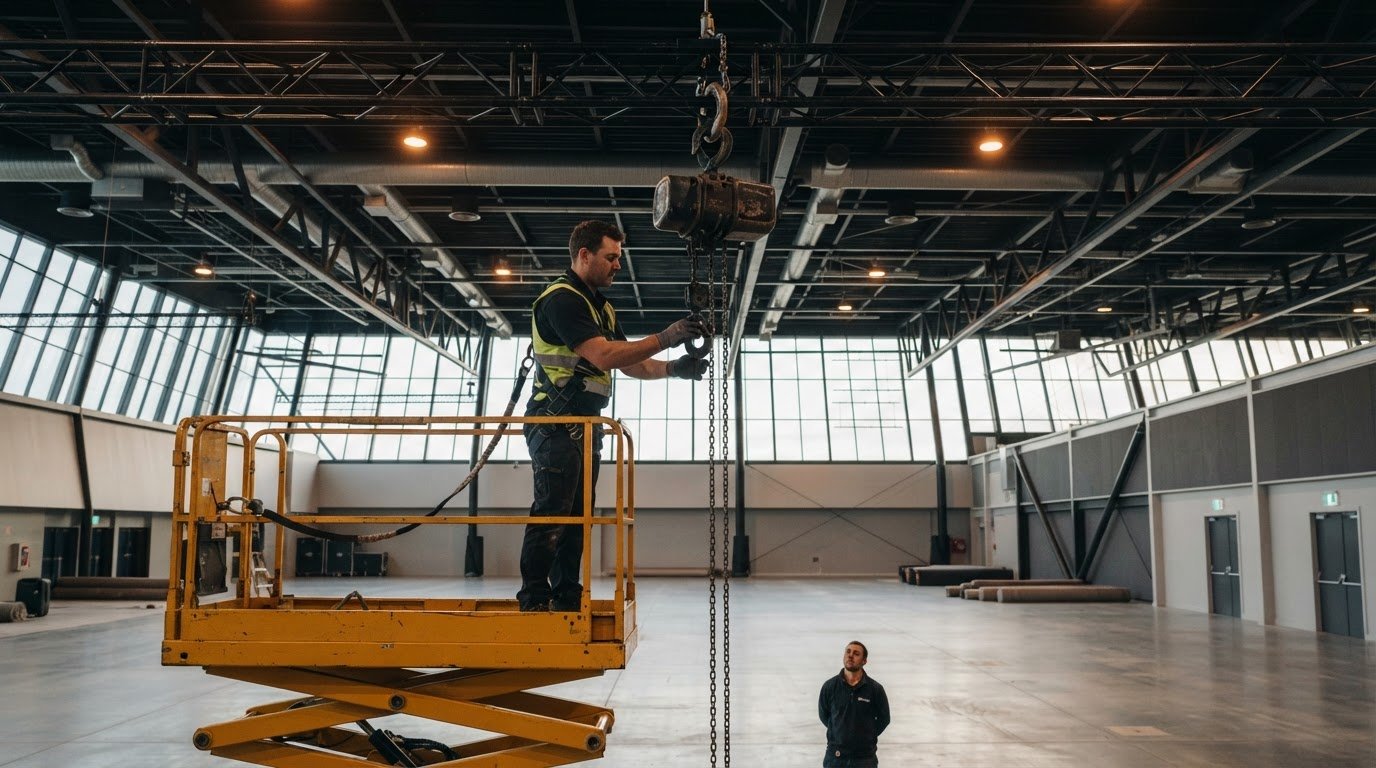
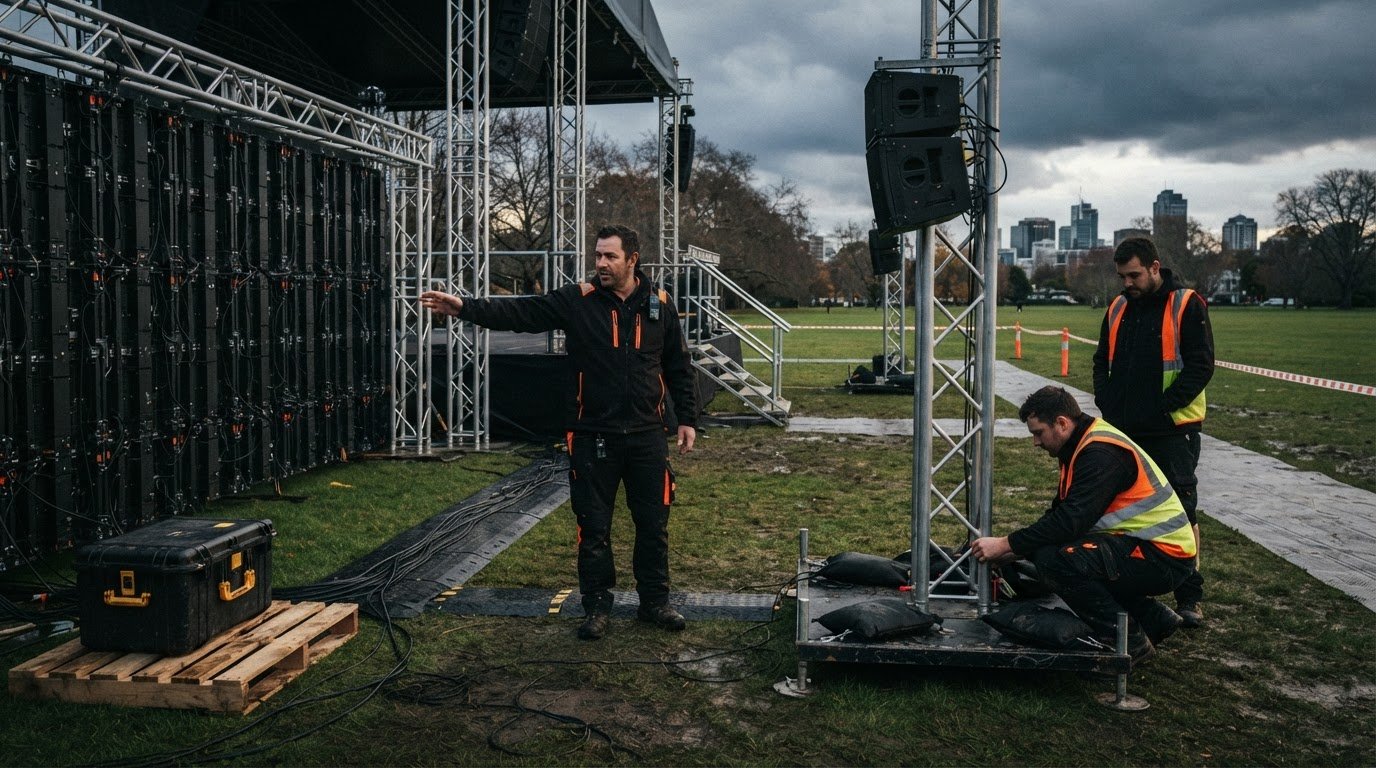
Specialties define responsibilities. Audio technicians manage sound systems; lighting technicians focus, patch and operate lighting; video technicians support screens and camera feeds; and staging crew handle stage elements and setup. A production lead coordinates these roles with planners and technical directors so cues and equipment changes follow the event plan.
Freelancers can fill a defined role, while production companies can coordinate several disciplines and equipment. Venue crews bring knowledge of their site and systems. Choose based on whether your event needs one specialist, a coordinated team or venue-specific support. Clear role boundaries help prevent gaps during setup and show calling.
Technician availability across New Zealand depends on event dates, travel, crew requirements and technical scope. Costs also vary with those factors, hours worked and overtime arrangements. Finding reliable event technicians in New Zealand means understanding how staffing and travel fit the production schedule, rather than relying on a single standard rate.
Technicians are expected to maintain a safe and healthy workplace. Event planning should assign responsibilities for the venue, equipment setup and work activities. Insurance arrangements depend on the contract, venue and assigned duties, so production documentation should clarify who is responsible for each area.
Hourly, day and overtime rates vary with the role, hours and production requirements. A quote request can set out these factors for the specific event. When finding reliable event technicians in New Zealand, assess the proposed crew plan alongside its cost structure and responsibilities.
Auckland’s lighting technician role works with event planners, producers and technical directors from design through event delivery. It covers corporate dinners, conferences, live music events, festivals and theatre productions. The technician is expected to oversee lighting, power, LED and control system operation and deployment, packing in, operating, packing out, preparing, maintaining and storing lighting equipment.
How can a professional event production provider supply reliable event technicians in New Zealand?
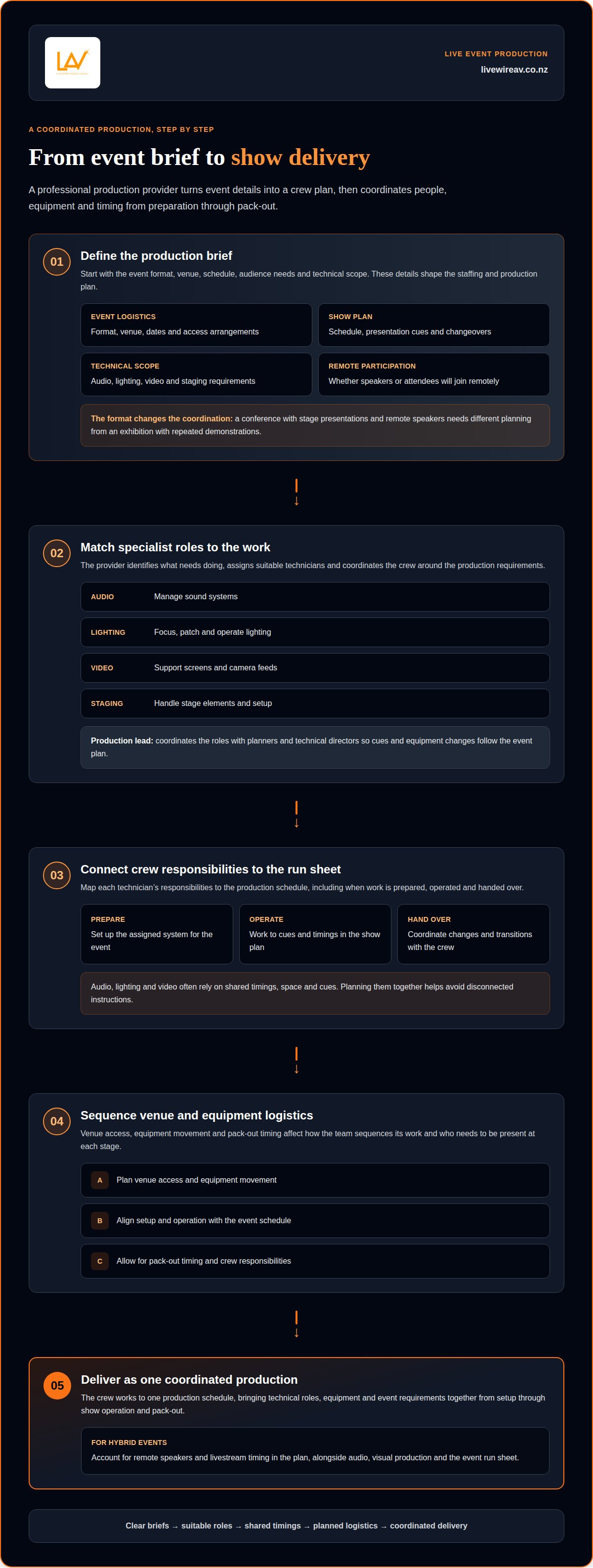
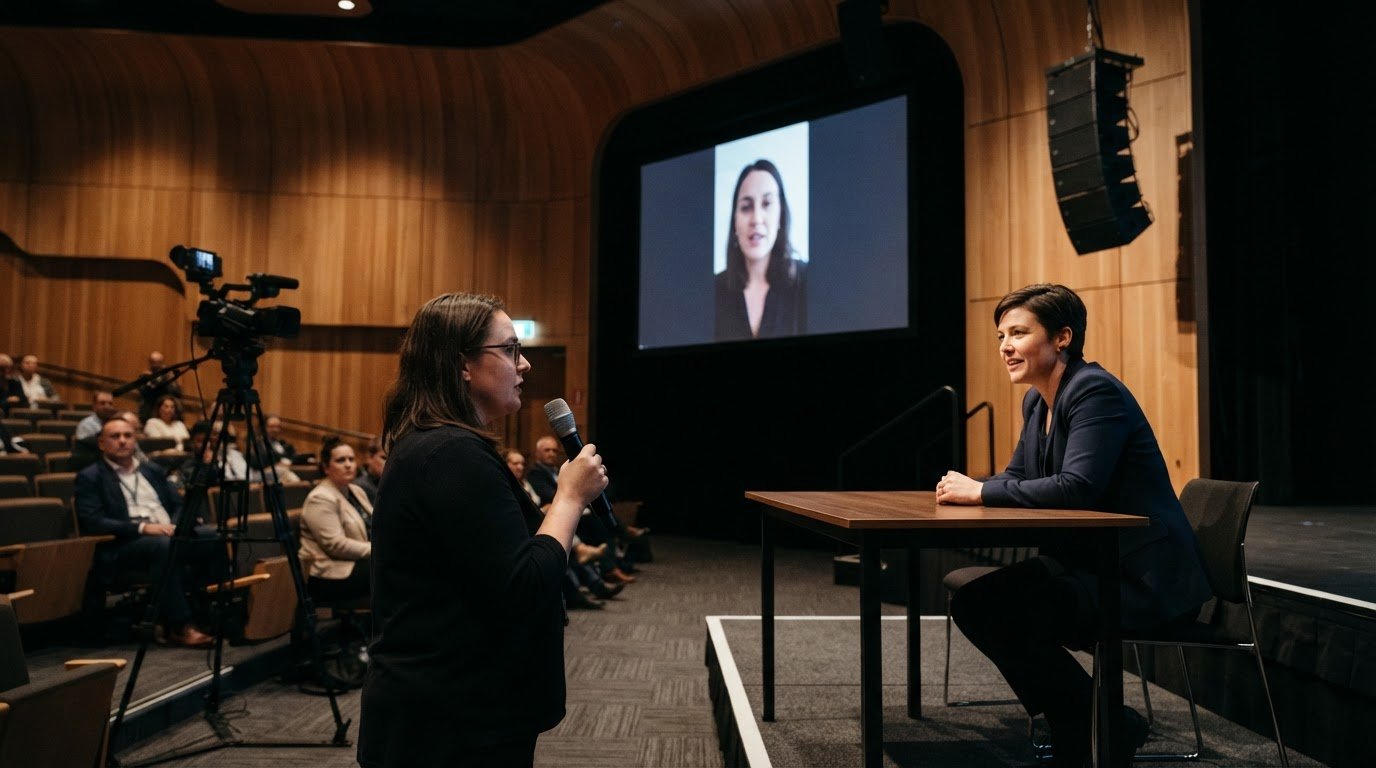
A professional event production provider matches technician roles to the production brief. Planning starts with the event format, venue, schedule, audience needs and technical scope. For example, a conference with stage presentations and remote speakers needs different coordination from an exhibition with repeated demonstrations. The provider turns these details into a crew plan and aligns setup, operation and pack-out with the event schedule.
When finding event technicians in New Zealand, a production provider offers a practical starting point because technical staffing can be planned alongside equipment and show requirements. The provider identifies the work involved, assigns suitable roles and coordinates the crew around key production milestones. This helps avoid treating audio, lighting and video as separate tasks when they rely on shared timings, space and cues.
A clear production brief helps shape the plan. Useful details include:
Event format, venue, dates and access arrangements.
Show schedule, presentation cues and changeovers.
Audio, lighting, video and staging requirements.
Whether speakers or attendees will join remotely.
With those details, the production lead can map crew responsibilities to the run sheet. A technician assigned to a specific system knows when to prepare, operate and hand over the work. For a hybrid event, the plan must also account for remote speakers and livestream timing. The crew can then work to one production schedule instead of relying on disconnected instructions.
During planning, the provider can also account for venue access, equipment movement and pack-out timing. These logistics affect how the team sequences its work and who needs to be present at each stage. For a production requiring joined-up technical planning, full technical production brings the crew plan and event requirements into one coordinated process.
How can a professional provider demonstrate an event technician’s experience, references, and qualifications in NZ?
A professional provider can demonstrate a technician’s suitability with a clear record of relevant work. That record should connect the person’s role to event types, equipment and responsibilities. For example, a lighting technician’s experience may include preparing fixtures, patching systems and operating cues during conferences. The Auckland Senior Lighting Technician role prefers a minimum of 5 years of experience in a similar role. This is a role-specific preference, not a universal benchmark for every event technician.
References add context to a work record. A provider can share examples from comparable productions and explain the technician’s contribution, such as coordinating lighting changes or supporting a conference run sheet. A reference is most useful when it relates to similar work and conditions. Experience on corporate dinners, for instance, may demonstrate different strengths from festival or theatre work.
Role history: relevant event types, responsibilities and technical systems.
Work examples: specific contributions, such as focusing and patching lighting.
References: feedback connected to comparable event work.
Qualifications: credentials or training relevant to the assigned duties.
Qualifications should be described accurately and matched to the technician’s actual tasks. A credential, course or training record can show preparation, while work history helps demonstrate practical experience. These are different forms of evidence. For example, a record of operating lighting at conferences shows applied experience; relevant training may show technical learning. Neither proves unrelated skills.
A useful provider explanation sets out who will lead the work and how each technician fits into the production team. The event planner can then understand the named roles, reporting lines and responsibilities before the schedule is finalised. For productions involving lighting, audio and video, role descriptions make handovers clearer. This evidence-led approach makes experience easier to assess without treating one qualification or reference as the whole picture.
What licences or certifications are required for event technicians in New Zealand?
Requirements depend on the technician’s duties, equipment and work setting. The general title “event technician” doesn’t identify every credential relevant to a particular role. A lighting operator, audio technician and crew member handling other production tasks may need different training or evidence of competence. The production plan should connect each person’s qualifications to their assigned responsibilities.
Distinguish a licence from a certification, training record and practical experience. These documents show different things. A qualification may demonstrate completed learning, while an event work history shows experience applying skills. Neither proves every capability. For example, lighting experience alone doesn’t establish competence in audio operation.
A professional provider can make the distinction clear by documenting:
The technician’s event role and assigned duties.
Relevant qualifications, training and practical experience.
Any role-specific licence or authorisation needed for the work.
How the technician’s work fits the venue and production plan.
For a lighting role, that evidence might relate to preparing, focusing and operating lighting systems. For audio, it should relate to the assigned sound responsibilities. This prevents a broad certificate from being presented as a substitute for relevant experience. Venue requirements and the nature of the task also shape production planning.
Safe work matters across event roles. Technicians are expected to maintain a safe and healthy workplace, and the production plan should account for safe practices during setup, operation and pack-out. The provider can define responsibilities for each task and identify relevant training or credentials as part of crew planning. This keeps documentation connected to the actual work, rather than relying on a generic list of certificates.
For a production where technical roles and responsibilities need coordination, plan your event’s technical production around the work, venue and crew requirements.
Credentials are only part of assessing a technician’s suitability for an assigned role. The work also calls for strong problem-solving and troubleshooting, excellent communication and interpersonal skills, and the ability to perform in a fast-paced, high-pressure environment. Consider these capabilities alongside relevant training and practical experience when assessing readiness for the responsibilities in the production plan.
LivewireAV: Hybrid & Livestream Events
LivewireAV supports productions that bring in-room and remote audiences together. Its Hybrid & Livestream Events offering brings the event’s technical requirements together, while Full Technical Production can coordinate the wider production. This is a practical option when your programme includes presenters onsite and online, or a livestream alongside the live stage.
For a conference, LED Walls & Projection can support visual content in the venue, while Audio Line Array Systems support event sound. The right requirements depend on the programme, venue and audience format. Sharing those details helps shape a coherent technical plan for your event in New Zealand.
Contact LivewireAV to discuss the technical production requirements for your event.
Plan the next step with confidence
A considered approach to finding reliable event technicians in New Zealand starts with the production your event needs. Before confirming the plan, define the audience experience, key moments and how the event should connect with people in the room or online. This gives the technical team a clear purpose, not just a list of equipment requirements.
LivewireAV supports this planning through Full Technical Production, Hybrid & Livestream Events, and LED Walls & Projection. The right combination depends on your programme, venue and audience. Discussing these priorities helps shape a production plan around the event itself.
Bring your event goals and practical requirements together in one conversation. Contact LivewireAV to discuss your event and take the next planning step with a clear direction.
Frequently Asked Questions
What questions should I ask when hiring an event technician in New Zealand?
Ask how the technician will prepare for your event and communicate changes on the day. Clarify who leads technical decisions, how run sheet updates are handled, and what information they need from presenters. For example, if presentation files may change, agree on how updates will reach the technician and who approves them. These answers show whether the working process fits your event.
How do technician availability and costs vary across Auckland, Wellington, Christchurch, and regional New Zealand?
Availability depends on event dates, travel, crew requirements and technical scope; the article gives no separate comparison for Auckland, Wellington, Christchurch and regional New Zealand. Costs vary with those factors, hours worked and overtime arrangements.
Comments