Managing audio for outdoor festivals: hire costs and setup
The speaker package is only one part of an outdoor festival’s audio budget. Managing audio for outdoor festivals means accounting for crowd size, site layout, weather exposure and the system needed to deliver clear sound across the venue. The price depends on the project and is provided after a quote request, with equipment, coverage and technical support shaping the scope.
It’s understandable to want a straightforward hire figure before planning begins, but a setup suited to a compact gathering may not cover a larger or more complex site. Defining the scope helps you plan for consistent coverage, rather than focusing on equipment costs alone.
This guide explains the factors that shape outdoor festival sound planning in New Zealand, how weather and venue conditions affect setup, and when line arrays or subwoofers may be appropriate. It also covers how contingency planning and sound checks help keep production organised and audio ready for the event.
Table of Contents
1. How Much Does Outdoor Festival Sound System Hire Cost?
Outdoor festival sound-system costs grow with audience size, coverage and production needs. A small event with fewer than 200 people differs from a medium event of 200 to 500, or a large event of 500 to 1,000. Larger crowds usually need more speakers, wider coverage and closer technical monitoring. Price depends on the project and is given after a quote request; audience size, venue layout, equipment, cabling, power distribution and technical support shape the cost.
There’s no single speaker count or amplifier power that suits every audience. The system must match the site’s dimensions, audience spread, stage position and coverage requirements. A long, open field, for example, may need distributed speakers, while a compact outdoor event may suit a simpler arrangement. Power requirements depend on the equipment and system design, not audience size alone.
Consistent coverage means listeners can hear clearly across the venue, not just near the stage. Directional speakers can focus sound towards the audience and help limit sound bleed. At larger sites, delay towers place additional speakers at intervals, with timing adjusted to keep distant audio synchronised with the main stage. Outdoor conditions differ from those in an indoor room, so engineers monitor and refine levels across listening areas.
Coordinate the sound plan with performers, stage managers and event organisers before the event. Share set times, performer inputs and stage changes, then test levels and transitions during the sound check. For acts performing with backing tracks or pre-recorded stems, professional production facilities like Starsound Studios highlight how cleanly mixed source audio translates far more reliably through high-powered festival systems. This gives each team a clear cue plan and time to flag issues before the audience arrives.
Sound is one part of production. Full event production may also include video, lighting and stage coordination. Plan speakers, cabling and power distribution together, and keep cable routes clear of audience movement. Outdoor sound levels should comply with the local noise regulations that apply to the event, and technicians should prevent sudden volume spikes or excessive noise. Managing audio for outdoor festivals means balancing coverage, safe operation and the needs of the full event.
2. Contingency planning for adverse weather and equipment failure
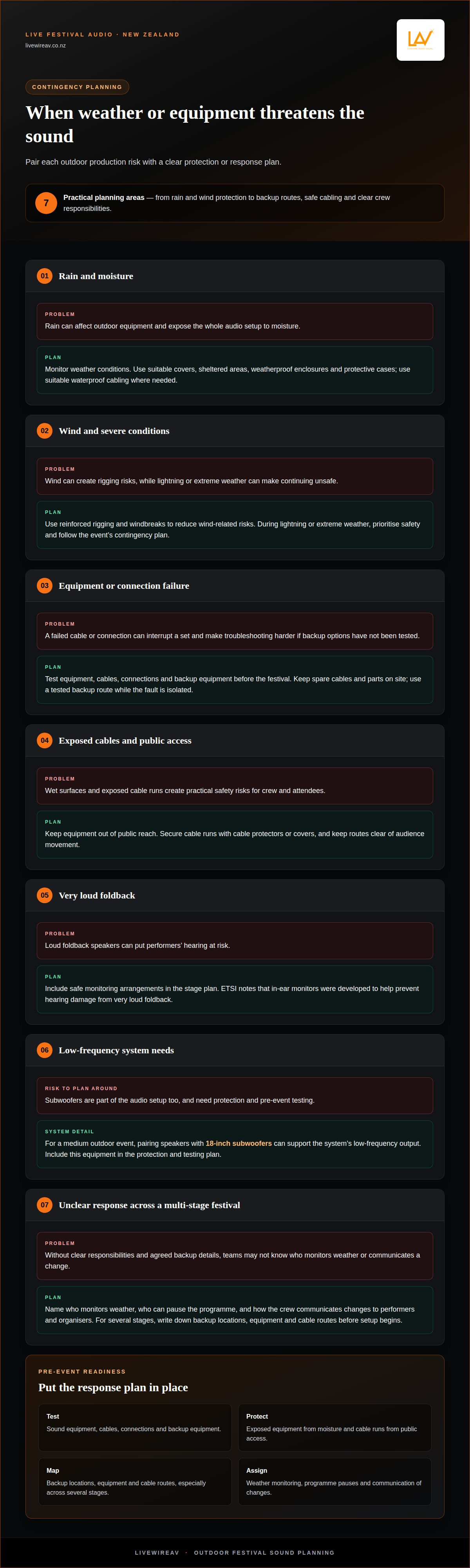
Wind and rain can quickly affect an outdoor production. Monitor weather conditions, protect equipment with suitable covers or sheltered areas, and include an indoor relocation option in the contingency plan. Reinforced rigging and windbreaks can reduce wind-related risks. During lightning or extreme weather, prioritise safety and follow the event’s contingency plan.
Build the plan around specific failure points. Test sound equipment, cables, connections and backup equipment before the festival, and keep spare cables and parts on site. If a connection fails during a set, technicians can use the tested backup route while isolating the fault. This keeps troubleshooting controlled and helps the production team respond methodically.
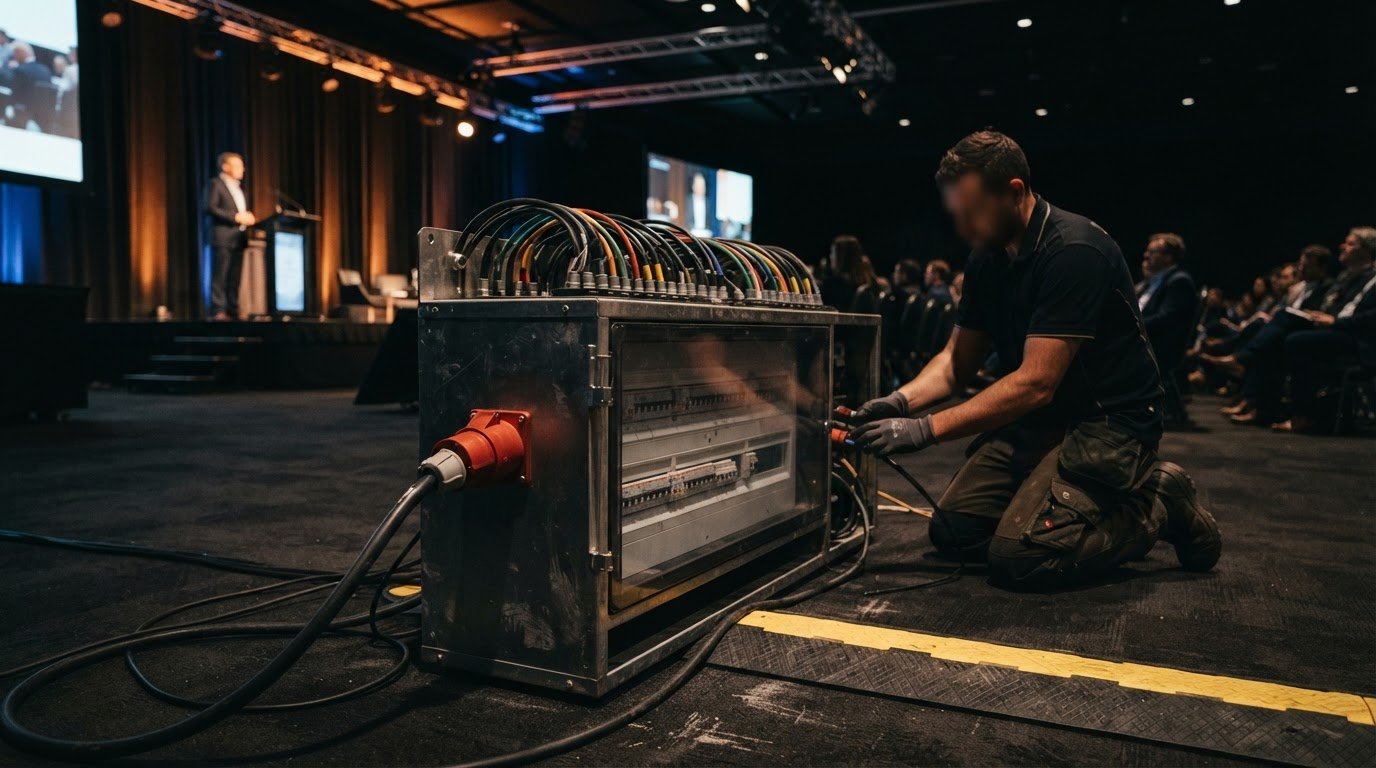
Protect the whole audio setup from moisture, not just the speakers. Use weatherproof enclosures and rugged utility cases from ProX for exposed equipment, with suitable waterproof cabling where needed. Keep equipment out of public reach, and secure cable runs with cable protectors or covers. These measures reduce rain exposure and help prevent trips for crew and audience members.
Wind, wet surfaces and exposed cables create practical health and safety risks for crews and attendees. Loud foldback speakers can also put performers’ hearing at risk. ETSI notes that in-ear monitors were developed to help prevent hearing damage from very loud foldback. Include safe monitoring arrangements in the stage plan.
For a medium outdoor event, pairing speakers with 18-inch subwoofers can support the system’s low-frequency output. Keep that equipment protected and include it in pre-event testing. A useful contingency plan names who monitors weather, who can pause the programme, and how the crew communicates changes to performers and organisers. Clear responsibilities make a successful response more likely.
For a festival with several stages, write down backup locations, equipment and cable routes before setup begins. A coordinated production plan can bring those technical details together with the event schedule.
3. Line arrays and subwoofers for larger festivals
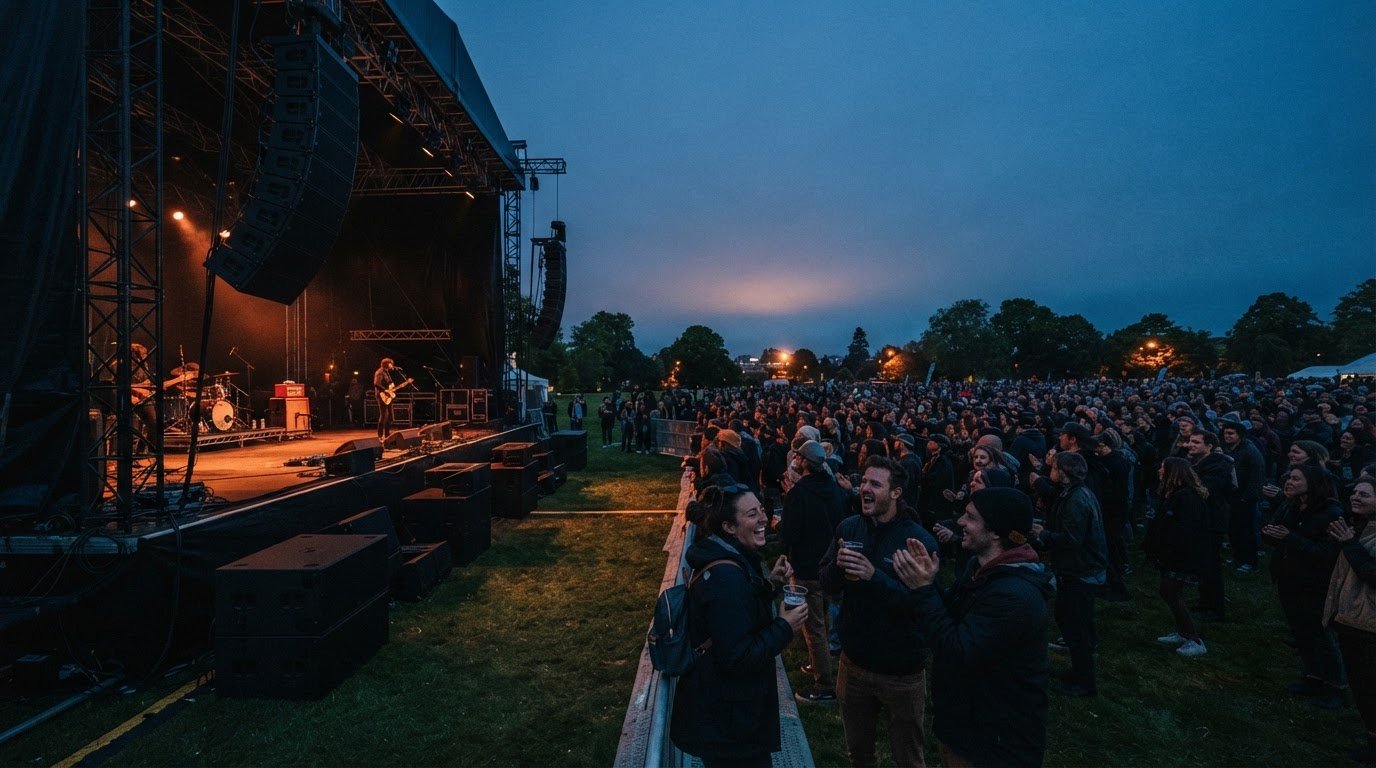
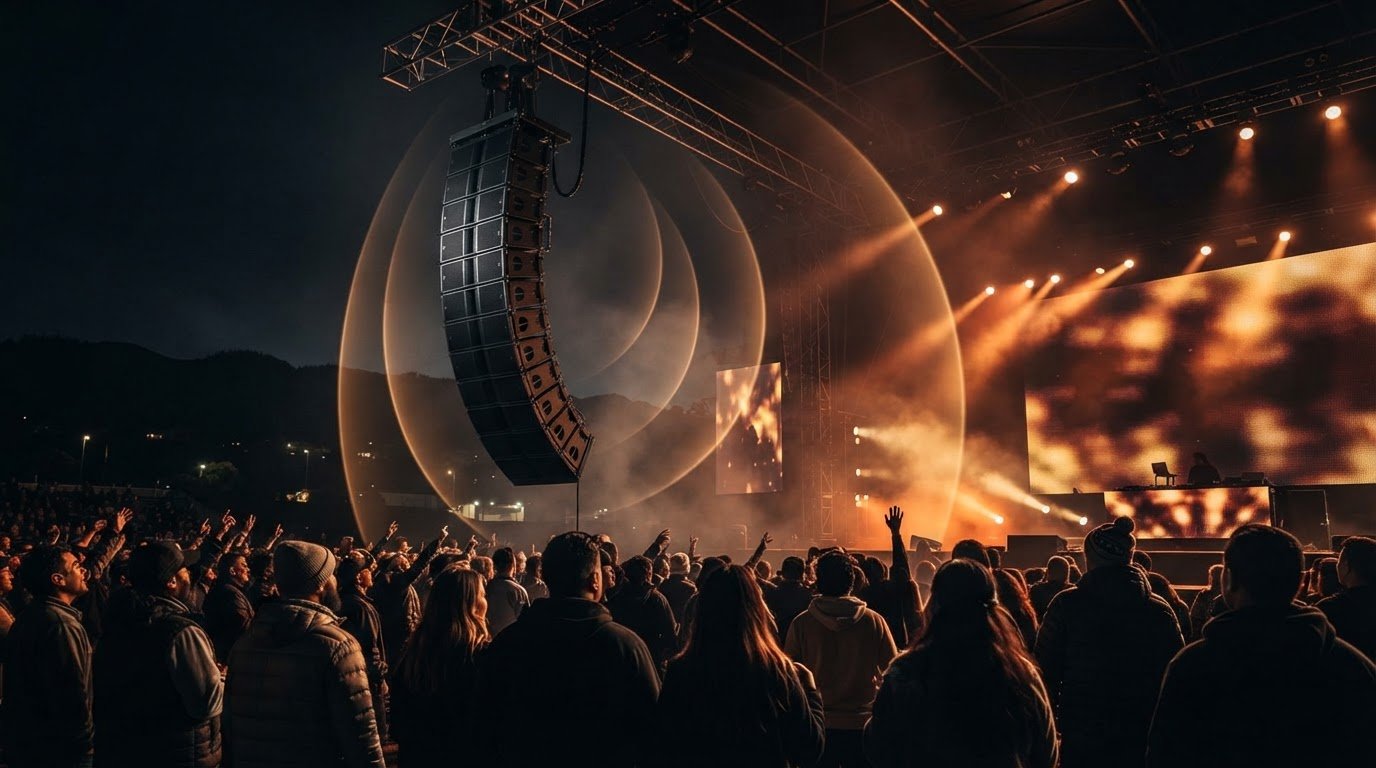
At a large outdoor festival, sound must reach attendees across a wide area. Line arrays can suit larger festivals because they project audio farther and distribute it more evenly. Subwoofers add low-frequency sound, but their configuration affects how bass spreads around the site. Engineers can adjust placement to reduce dead zones and avoid uneven bass build-up.
Point-source systems offer flexibility across different venues and layouts. They may suit a stage serving a compact or clearly defined audience area, while line arrays can better address longer distances. The choice depends on site dimensions, audience positions and the coverage needed. A field with a distant viewing area, for example, calls for a different approach from a smaller festival space beside the stage.
Speaker placement shapes what attendees hear. Start with the stage and audience layout, then position speakers to cover listening areas evenly. Adjusting speaker angles and heights can improve projection while reducing overlap, interference and hotspots. A speaker aimed too broadly may send sound beyond the audience; careful direction keeps more output focused on the intended area.
Subwoofer placement needs the same attention. Test configurations across the audience area, rather than judging bass only from beside the stage. A setup that sounds strong near the front may provide weaker coverage elsewhere. Adjusting the arrangement can improve bass distribution and reduce dead zones without relying on extra volume.
Before finalising the system, map the stage, audience zones and areas needing additional coverage. Assess where the main speakers and subwoofers can sit without blocking sightlines or access routes. For a long site, plan how coverage will extend from the front audience area to the back. A line array system can support projection over that distance, while well-positioned subwoofers help keep low-frequency sound more consistent. Choose equipment to suit the venue, not a fixed formula.
4. Assessing venue acoustics and environmental conditions
Walk the site before fixing speaker positions. Map the stage, audience areas, access routes, terrain and available power. A flat, open field presents different coverage needs from a sloping site or a venue bordered by buildings. These details shape equipment placement and help the sound team plan for clear audio across the intended listening areas.
Wind can deflect sound waves, creating distortion or uneven audibility across an outdoor venue. Temperature and humidity can also affect sound-wave distribution and the absorption of higher frequencies. Record expected conditions in the production plan, then reassess during setup. If the wind shifts, engineers can refine speaker direction and levels to help maintain clarity for attendees.
Use the sound check to test the system from different audience positions, not just beside the mixing desk. Ask a team member to listen near the front, at the sides and towards the back. Their feedback can reveal where speech or instruments sound less clear, helping the engineer adjust the system before performances begin.
Digital signal processing gives engineers tools to refine frequency response and balance as outdoor conditions change. For example, they can adjust the system during sound checks if wind or temperature affects the perceived balance. Make changes carefully and monitor the result across the audience area, rather than relying on a single listening position.
Adjacent stages need particular attention because their sound can overlap. Include stage orientation and operating times in the site plan. Noise barriers or absorbers between stages can help contain sound bleed. Check how terrain and equipment positions affect those boundaries, then review the arrangement during technical rehearsals. A venue assessment connects these acoustic decisions with practical needs, including power access and safe equipment placement.
For an outdoor site where layout, weather and coverage interact, discuss your festival production requirements as part of planning the technical setup.
LivewireAV: Full Technical Production
LivewireAV provides Full Technical Production for festivals where audio needs to work alongside other event systems. Its Audio Line Array Systems support productions where sound must reach audiences across a larger site. For events that also need visual elements, LED Walls & Projection can support the programme, while Hybrid & Livestream Events connect on-site and remote audiences.
Consider this support when your plan includes several technical components, such as stage audio, screens and livestream delivery. Coordinating those requirements within one production plan helps align equipment, venue layout and event timings. The right scope depends on the festival’s needs and the experience you want attendees to have.
Contact LivewireAV to discuss technical production for your outdoor festival.
Set the audio plan in motion
A clear production brief turns festival audio decisions into practical priorities. Note what the audience needs to hear, how the programme will run and which site conditions could affect delivery. Share those requirements with the event team so technical planning can align with the schedule, performers and venue.
Managing audio for outdoor festivals works best when decisions are part of the wider production plan, not a last-minute equipment choice. Bring together your event schedule, site layout and audience expectations. This gives the production team a clear starting point for shaping the technical approach around the event.
LivewireAV can support event planning with Full Technical Production, including visual and hybrid event components where they fit the programme. To discuss your festival’s requirements and plan the next steps, talk with LivewireAV about your festival audio. A considered plan gives your team a practical foundation for a well-run event.
Frequently Asked Questions
How Much Does Outdoor Festival Sound System Hire Cost?
Outdoor festival sound-system planning in New Zealand should reflect the project’s requirements, not a standard setup. The scope depends on audience size, site shape, coverage, equipment, cabling, power distribution and technical support. A broad field, for example, may need a different system plan from a compact, single-stage site. Share the event date, location and expected audience when planning the setup.
What sound level limits apply to outdoor festivals in New Zealand?
Festival sound should comply with the local noise regulations that apply to the event site. There isn’t one sound-level figure that applies to every New Zealand venue. Build sound monitoring into the operating plan, and set a process for responding to excessive volume or sudden level changes. The venue’s location, nearby sound-sensitive areas and event conditions shape the relevant limits.
What permits and noise consents are needed for festival sound systems in NZ?
Permit and noise-consent requirements depend on the event site and its conditions. Review the venue’s existing approvals, then establish which event permissions and noise conditions apply with the relevant local authority. Include operating hours, stage locations and sound management in the production plan. This gives organisers a practical basis for aligning the audio schedule with the site’s consent conditions.
How do you plan PA coverage for an outdoor festival site?
Plan PA coverage using a scaled site map showing the stage, audience areas, barriers and secondary listening zones. Mark where spoken announcements need to be clear, such as entrances or food areas, as well as the main performance space. During the sound check, listen from those locations and adjust the coverage plan if a zone is poorly served. Keep access routes clear.
How do you choose line array speakers and subwoofers for an outdoor festival?
Choose the system to suit the venue’s dimensions, audience spread and stage arrangement. Line arrays can suit sites that need sound projected over longer distances, while point-source systems offer flexibility for different layouts. Subwoofer placement affects bass distribution, so assess it across the audience area, not just from the stage. A site plan helps identify where each speaker type can best serve the event.
What does outdoor festival sound system hire cost in New Zealand?
There’s no single price for outdoor festival sound-system hire. The project scope reflects the setup requirements, including audience numbers, site layout, equipment, cabling, power distribution and technician support. To define the scope, prepare the event type, date, venue location and expected crowd size. Those details help shape an audio plan around the actual site and programme.
Comments