Technical production for fashion shows, from planning to AV
Technical production for fashion shows brings lighting, video, sound and production management together so collections are presented clearly on the runway and, where needed, on camera. Early planning aligns the technical design with the venue, show schedule and creative direction. The crew can then coordinate equipment, rehearsals and live cues to keep the technical work in step with the presentation.
A strong show depends on more than a striking runway. Lighting needs to reveal garments and work for cameras, while video and sound support the atmosphere and any livestream. This article explains how those elements fit together, why production management and planning matter, and how freelance technical teams can support fashion week events. You’ll also see what shapes the production approach, from venue layout and rigging to rehearsals and contingency planning, so you can understand what a professional team contributes before show day.
Table of Contents
Lighting, video and live event technology
Fashion show production brings lighting, sound and video together around the designer’s concept. Their placement and cues shape how each collection appears live and on camera.
Technical production companies in Auckland, Wellington and Christchurch are best compared by how their plans respond to each venue, show concept and audience. The city alone doesn’t determine the right setup: venue layout, runway position, camera needs and the creative brief all influence the design.
Lighting, Sound and Video Equipment
The equipment supports the runway presentation, soundtrack and video coverage as one coordinated system. Lighting can help garments read clearly for guests and cameras, while sound carries the music that sets the show’s pace. Video equipment can support filming or livestreaming, allowing audiences beyond the venue to follow the collection. Each choice affects how the show is experienced in the room and on screen.
Set and Lighting Design
Set, lighting and sound design translate a fashion show’s concept into a coherent stage environment and soundtrack. The designer’s sketches and creative direction can guide the set’s form, lighting positions and visual mood. Lighting needs to reveal colour, texture and detail on moving garments, not just create an attractive runway. The plan should also consider how the collection will appear on camera. These decisions help the production support the clothes rather than compete with them.
Sound and lighting cues can be coordinated with runway choreography, so changes in music and atmosphere follow the presentation. For example, a gradual lighting shift can mark a transition between looks or sections. A shared cue plan gives the technical crew and show team a common sequence to rehearse. That coordination matters when models, music and camera coverage need to align during a live fashion week presentation.
For streamed shows, video planning also shapes camera positions and what they capture. A close view can reveal garment details, while a wider shot shows the runway and set together. Filming designer sound bites, Q&As or audience interviews can extend the event’s content beyond the live presentation. The production approach should connect these shots with the show’s visual concept and lighting, creating footage that remains useful after the runway is clear.
Production management and quality standards
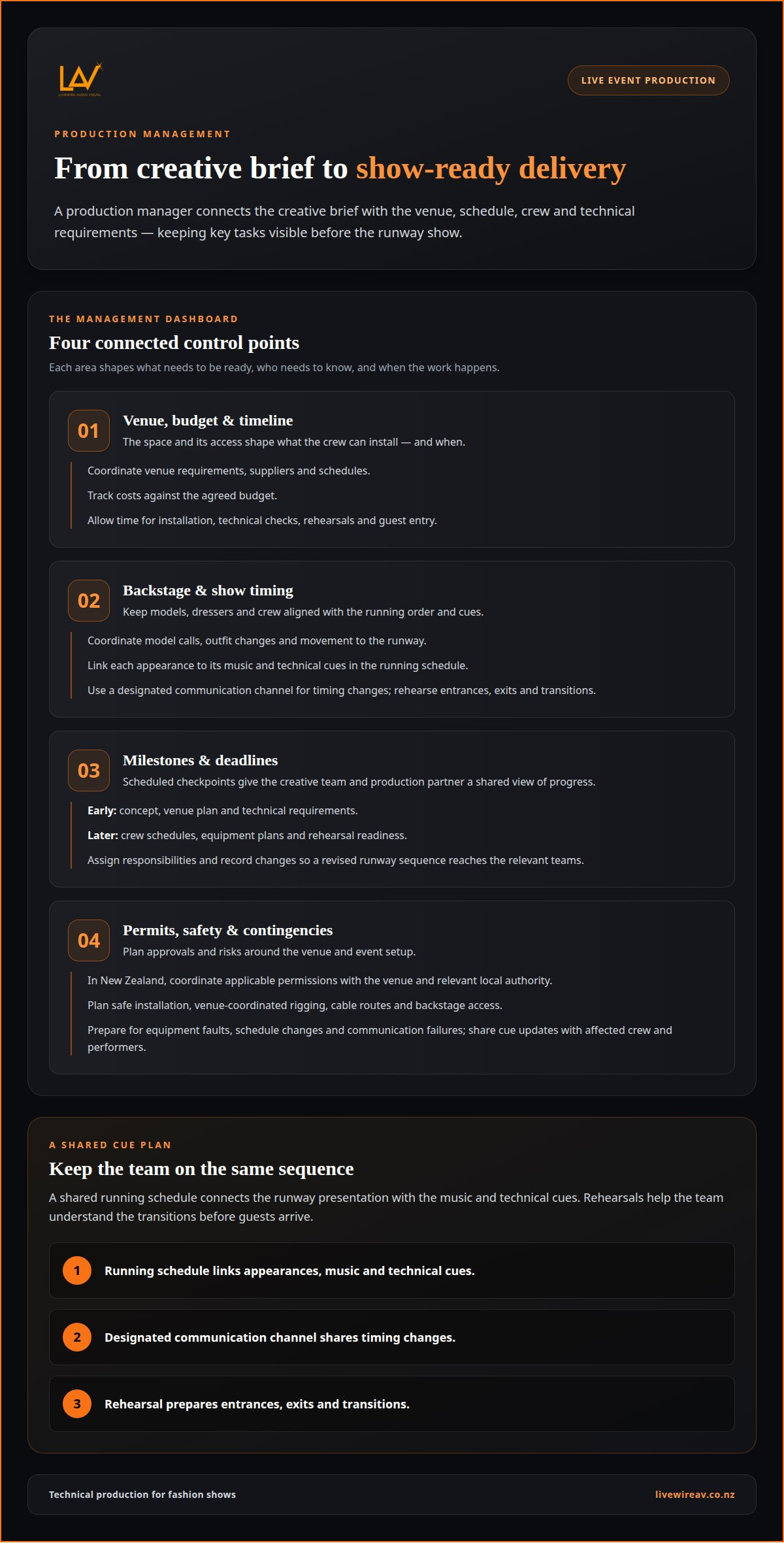
A production manager connects the creative brief with the venue, schedule, crew and technical requirements. Clear milestones help everyone understand what must be ready before the runway show.
Venue, Budget and Timeline Management
Venue, budget and timeline management align the event space, available resources and delivery schedule. A venue’s layout and access shape what the crew can install and when.
The production team coordinates venue requirements, suppliers and schedules, then tracks costs against the agreed budget. A show in a shared event space, for example, needs its load-in and setup planned around venue access and other events. Timelines should allow for installation, technical checks, rehearsals and guest entry, so one delay does not compress the remaining work.
Backstage Management and Show Timing
Backstage management organises activity behind the runway and keeps models, dressers and crew aligned with show cues. Late changes backstage can affect the sequence and timing experienced by the audience.
A backstage manager oversees model calls, outfit changes and movement to the runway. The running schedule links each appearance to its music and technical cues, while a designated communication channel lets the team share timing changes. Rehearsals help participants understand entrances, exits and transitions before guests arrive.
Production Milestones and Deadlines
Production milestones are scheduled checkpoints for completing key decisions and tasks. They give the creative team and production partner a shared view of progress and outstanding work.
Early milestones can cover the concept, venue plan and technical requirements; later ones can track crew schedules, equipment plans and rehearsal readiness. The production manager assigns responsibilities and records changes, so a revised runway sequence reaches the relevant teams. Fashion show production also involves coordinating suppliers and onsite staff around those deadlines.
Permits, Safety and Contingency Planning
Permit and safety planning identifies approvals and risks relevant to the venue and event setup. In New Zealand, the production team coordinates applicable permissions with the venue and relevant local authority, rather than assuming one rule applies to every site.
The team plans safe installation, coordinates rigging with the venue, and considers cable routes and backstage access. Contingency plans address equipment faults, schedule changes and communication failures. If a cue changes, for example, the production lead shares the update with affected crew and performers so the revised plan is clear.
Early planning and freelance collaboration
Early planning turns a designer’s concept into a workable production brief. The technical team can work with creative directors well before the show to develop the concept, set and logistics. Planning technical production for fashion shows early gives the team time to connect the collection’s identity with the runway’s visual language. It also lets technical decisions reflect the venue, audience and planned content, rather than being made in isolation.
Freelance specialists bring focused skills to a production team. A lighting designer shapes the visual environment, while a technical manager coordinates technical requirements. A movement director can work with the creative team on runway choreography, helping it express the collection’s spirit. Defined responsibilities and shared schedules help specialists coordinate decisions, identify dependencies and keep changes visible across the team.
Planning also connects the live presentation with its intended influence beyond the venue. If the show will be streamed or filmed, the production brief can include camera coverage and interview moments, such as a designer Q&A. That affects where freelance camera crew work and how their coverage fits the runway’s visual design. After the event, footage can be edited into social media content, extending the collection’s presentation beyond fashion week.
Clear communication is central to a coordinated production team. The production lead can circulate a shared running order, contact list and cue plan, then update relevant crew when the schedule changes. For example, a revised runway sequence needs to reach the movement director, models’ coordinators and technical operators before rehearsal. A production meeting can align the creative brief with practical requirements, so each specialist understands what their work must support.
For technical production for fashion shows, early decisions create room to adapt without losing the concept. A venue change can affect the set plan; a livestream can alter camera positions; a collection’s visual direction can influence lighting and staging. Bringing these dependencies into planning helps the team coordinate specialist skills around one coherent presentation, rather than treating each task as a separate brief.
Technical support for fashion week events
Fashion shows present collections to industry audiences, including retailers, press, stylists, influencers and media. Technical production for fashion shows needs to serve both people in the venue and viewers following remotely. That means aligning the designer’s vision with the event’s audience, format and planned content, rather than treating each show as an isolated runway presentation.
For a live audience, the production plan needs to keep the runway, sightlines and technical positions working together. Camera positions, for example, should capture garments without obstructing guests or disrupting model movement. A vision switching team can coordinate camera feeds for a livestream, selecting views that follow the collection and its transitions. These decisions shape how clearly viewers can follow the show as it happens.
Fashion show logistics can involve quick changeovers between presentations. The technical team coordinates equipment placement, setup and show cues with venue schedules and the wider production team. A shared running order helps operators follow the correct sequence, while a clear communication route allows changes to reach relevant crew promptly. This coordination is especially useful when multiple teams share a venue or event space.
Technical production for fashion shows should include checks of the actual show workflow, not just individual equipment. During the final seventy-two hours before a show, teams should test whether their tools work. A rehearsal can then expose issues with camera framing, cue timing or communication before the audience arrives. For a livestream, checking the complete signal path helps the crew identify where a picture or sound problem could interrupt the broadcast.
Fashion show content can extend beyond the live presentation. Filming designer sound bites, Q&As and audience interviews gives the event material for future social media use. The production team can coordinate recordings with the show schedule, so interviews do not conflict with runway calls. Footage can then be edited for later content, extending the collection’s visibility beyond its immediate audience.
For a coordinated approach to fashion week event requirements, discuss technical production support.
LivewireAV: Full Technical Production
LivewireAV provides Full Technical Production for fashion shows that need coordinated technical delivery, from planning through to show day. This is a practical fit when lighting, sound, video and crew coordination need to work from one production plan.
For a runway presentation reaching viewers remotely, Hybrid & Livestream Events can support the live and online experience. LED Walls & Projection can bring visual content into the venue, while Audio Line Array Systems support event sound. The right combination depends on the show’s creative direction, venue and audience.
Share your concept, venue details and event requirements with LivewireAV to discuss the technical production approach. Contact LivewireAV to start the conversation.
Shape the next show with a clear technical brief
Before production begins, define what the audience should notice, feel and remember. That creative intention gives the technical team a clear basis for shaping the show’s requirements, while the venue and event format guide practical decisions. A focused brief can also keep production choices aligned as plans develop.
For fashion show technical production, LivewireAV offers Full Technical Production, Hybrid & Livestream Events, and LED Walls & Projection. These services can support a presentation that needs coordinated technical delivery, remote viewing or visual content on screen. Outline your event, venue and creative priorities so the production conversation starts with the details that matter to your show.
Discuss your event with LivewireAV and take the next step towards a considered, well-coordinated presentation.
Frequently Asked Questions
What does technical production for a fashion show include?
It can include technical planning, equipment, crew and live operation across the show. The exact scope depends on the concept and format, from a runway presentation for an in-person audience to a hybrid event with remote viewers. For example, the production plan may coordinate lighting, sound, cameras, vision switching and operator cues, with a running order that connects technical changes to each part of the presentation.
How much does fashion show technical production cost in New Zealand?
The cost depends on the event’s production scope and is set out in a tailored proposal. Key factors include the venue, duration, crew and equipment needed, whether the show is livestreamed, and the complexity of its visual design. A straightforward runway event and a multi-screen hybrid presentation have different technical requirements. A clear brief helps define the work to include in the proposal.
What sound, lighting, staging and AV equipment does a fashion show need?
A fashion show’s equipment depends on its creative brief, room and audience. A production may use an audio system and digital mixing console for music and announcements, stage and intelligent lighting for the runway, and cameras with vision switching for live coverage. LED walls or projection can display visual content. The production plan should connect equipment choices to the show’s cues and how guests will experience it.
What venue and technical requirements should be checked before booking a fashion show venue?
Check that the venue can support the planned runway, audience layout and technical setup. Consider access for equipment load-in, available installation time, locations for control positions and cameras, and the venue’s requirements for rigging and cabling. For a livestream, allow for camera views and a suitable connection path. Sharing these details with the production team before booking can reveal conflicts between the room and the show concept.
How far in advance should you book fashion show production crew and equipment in New Zealand?
Begin planning as early as the concept and venue decisions allow. The technical team can work with creative directors well before a show, leaving time to develop the production plan and coordinate crew, equipment and logistics. A fixed event date, complex staging or livestream requirements make early planning particularly useful. Confirming the scope early also gives the production team a basis for scheduling milestones and rehearsals.
Comments